Essay · June 2026
What an AI-ready organization actually looks like
It isn't a tooling problem. It's a culture, data, and trust problem.
'AI-ready' litters corporate presentations, but few leaders can describe what readiness actually means. AI readiness isn't about procuring the latest models. It's about preparing the organization's culture, data, and trust so that AI can amplify human judgment rather than replace it. The difference between 'having AI' and 'being AI-ready' is the difference between owning a sports car and knowing how to drive it.
Culture
One of the biggest barriers to AI adoption is silos — IT, data, and business functions operating independently. Without cross-functional collaboration and shared accountability, AI projects lose direction and scalability. An AI-ready culture fosters curiosity, collaboration, and an agile mindset. It requires leadership commitment, governance, upskilling, and continuous communication. It isn't a technology challenge. It's a people challenge.
Data
AI is only as good as the data behind it. Walmart's early AI-driven demand forecasting was inaccurate because data pipelines and product hierarchies were fragmented. Overhauling governance and migrating to a unified data platform improved forecast accuracy and cut stock-outs by up to 30%. Novartis improved patient adherence model accuracy by nearly 30% and halved data prep time by unifying research, patient, and commercial systems. Netflix accelerated experimentation by 30% and lifted recommendation accuracy by 20% with a cloud lakehouse. Cleveland Clinic cut reporting turnaround by 40% through a centralized data platform.
Unified, governed data is the bedrock. Without it, every AI initiative is built on sand.
Trust
As AI becomes embedded in decision-making, trust becomes non-negotiable. Poor data quality, weak governance, and missing ethical safeguards delay or derail initiatives. Building trust takes ethical frameworks that address bias and explainability, robust security and privacy, and human-in-the-loop oversight. Without transparency and accountability, even technically sound models will face resistance.
Putting it together
Culture ensures teams understand why AI matters. Data ensures models are fed reliable signals. Trust ensures decisions are both effective and ethical. Readiness is a continuous journey, not a checklist — continuous learning, feedback loops that measure both business outcomes and model performance, governance embedded across the AI lifecycle, cross-functional collaboration. Only when these foundations are in place can AI act as a force multiplier instead of a distraction.
About the author
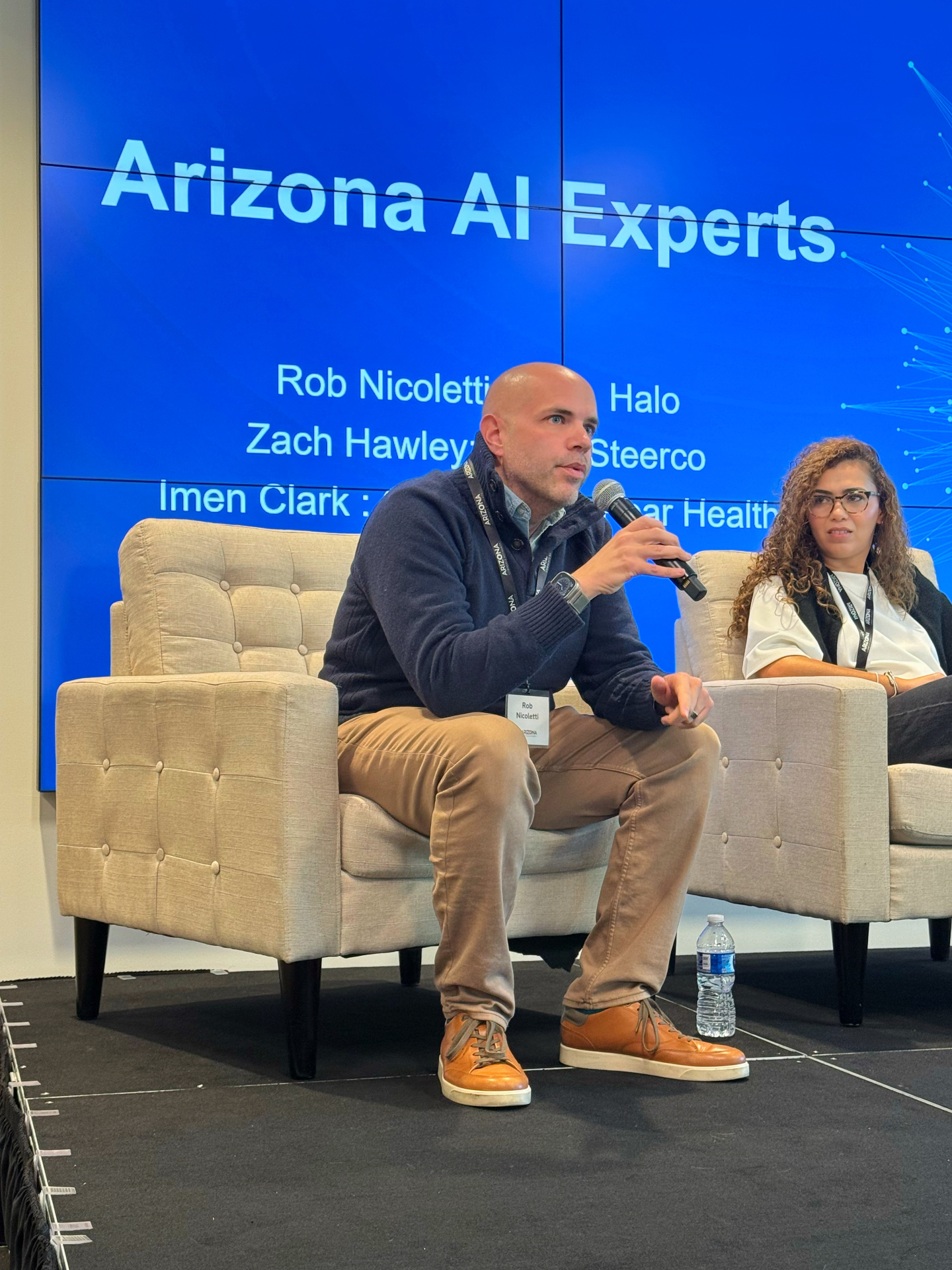
Rob Nicoletti
Founder, create human
Rob is the founder of create human and the architect behind HALO. He has spent the last two decades inside operating teams — building, scaling, and occasionally rescuing them — and writes here about AI, leadership, and what it takes to build organizations where humans become greater, not smaller.
Newsletter
Get the next essay in your inbox.
One email when the next piece of writing lands. No marketing, no list-sharing.