Essay · September 2025
Building organizations that learn
Most companies treat learning as a retrospective exercise. The ones that win treat it as a continuous loop.
Organizations are not machines; they're organisms that must learn and adapt. The Build–Measure–Learn loop emphasizes that learning should be built into short cycles of work. Instead of executing a static plan, teams build a small slice of value, measure what happens, and learn what to change. The concept applies far beyond startups. Every project life cycle — initiation, planning, execution, monitoring, closure — needs feedback loops so reality informs planning and lessons are captured.
The retrospective trap
Most organizations treat learning as a retrospective exercise: a post-mortem after a project, an end-of-year review. They miss the chance to learn while doing. The consequences are predictable: repeated mistakes, slow adaptation, stale strategies. A culture of learning requires psychological safety, experimentation, feedback loops, and strategic alignment. When employees feel safe to surface problems and propose ideas, experimentation flourishes. When experiments are small and frequent, failure is cheap and learning is fast. When feedback is integrated into the operating rhythm, insights accumulate instead of evaporate.
Judgment is a muscle. Architecture provides the scaffolding; deliberate practice builds the strength.
Systems that capture knowledge
HALO's loops record not just actions but rationales and outcomes. When LEO recommends an action and a leader adjusts it, the system learns the pattern. Over time, it can suggest better options and highlight where human judgment diverges from the algorithm. This creates a virtuous cycle of human–AI co-learning. It also democratizes knowledge: lessons from one location inform others, reducing the need to reinvent the wheel.
Practicing judgment
Leaders should debrief decisions, explore counterfactuals, share stories of both successes and failures. Reward curiosity and humility. In a world where AI handles routine analysis, human learning becomes the differentiator. Organizations that learn faster than their competitors will set the pace of their industries.
About the author
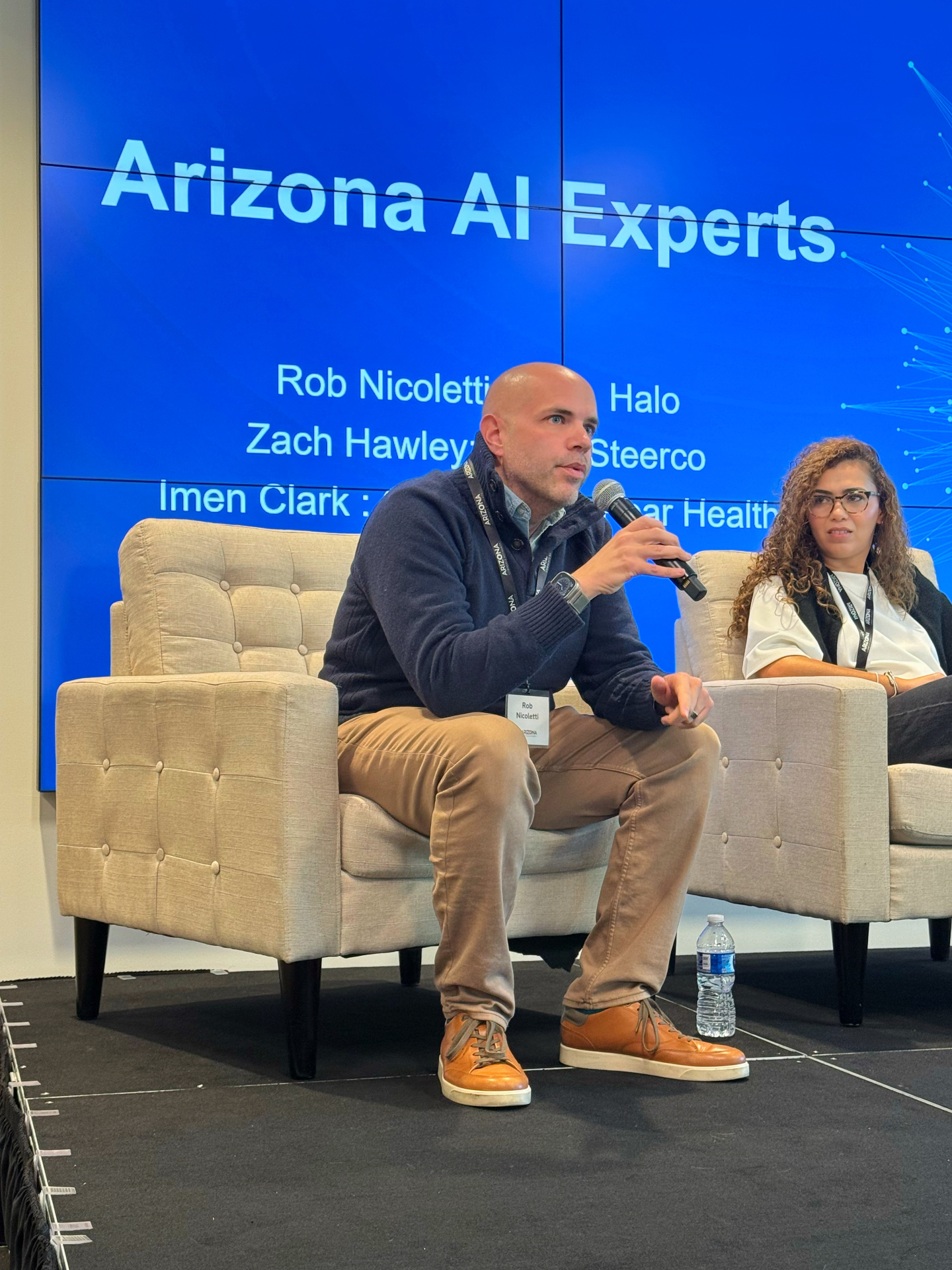
Rob Nicoletti
Founder, create human
Rob is the founder of create human and the architect behind HALO. He has spent the last two decades inside operating teams — building, scaling, and occasionally rescuing them — and writes here about AI, leadership, and what it takes to build organizations where humans become greater, not smaller.
Newsletter
Get the next essay in your inbox.
One email when the next piece of writing lands. No marketing, no list-sharing.