Field note · November 2025
The executive command center
Most command centers are really reporting rooms. They show what happened but don't orchestrate what happens next.
Step into the command center of a multi-location brand and you'll often see walls of screens filled with KPIs — sales charts, customer satisfaction scores, inventory levels. Leaders are surrounded by data yet still ask: 'Why didn't we see this coming?' Most command centers are really reporting rooms, not decision centers. They show what happened but don't orchestrate what happens next. Supply-chain teams invest heavily in visibility tools yet still struggle to respond to disruptions; visibility without decision rights creates awareness without action. Dashboards highlight stock-outs, but nobody knows who will reorder or approve overtime.
From viewing to doing
An executive command center must move from viewing to doing. It should integrate signals from across the enterprise, classify them by urgency, and route them to the right decision owners. It should provide context — why the metric deviated, what options exist, what trade-offs are involved — and track whether an action was taken. It should maintain a record of decisions so lessons are captured and duplicate debates are avoided.
A learning nervous system, not a wall of charts.
How HALO does it
When LEO detects an anomaly, it generates a recommended action and sends it to the responsible leader. If the leader accepts, HALO triggers the workflow. If the leader modifies or rejects it, HALO learns. Over time, the command center becomes a learning nervous system, not just a monitoring function.
Operating rhythm, not just tooling
Building a command center is not about technology alone — it's about operating rhythm. Leaders must agree on the cadence of reviews, the thresholds for escalation, and the boundaries of authority. Metrics should be chosen for their causal link to strategy, not because they're easy to measure. The system should surface leading indicators, not just lagging results. With those elements, the command center is a strategic asset. Without them, it's just another screen showing yesterday's news.
About the author
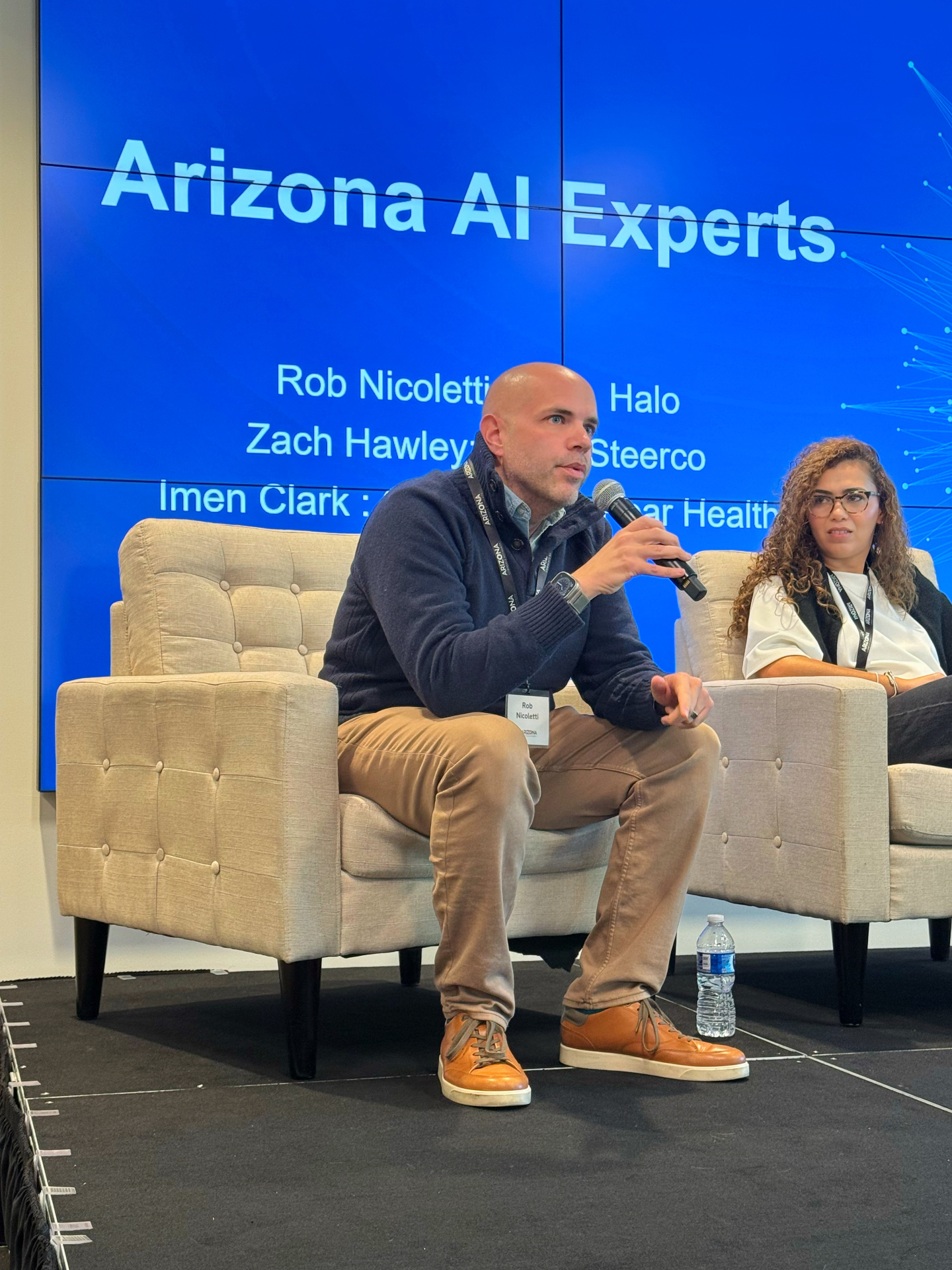
Rob Nicoletti
Founder, create human
Rob is the founder of create human and the architect behind HALO. He has spent the last two decades inside operating teams — building, scaling, and occasionally rescuing them — and writes here about AI, leadership, and what it takes to build organizations where humans become greater, not smaller.
Newsletter
Get the next essay in your inbox.
One email when the next piece of writing lands. No marketing, no list-sharing.