Field note · June 2026
The first hundred days of an AI-ready organization
Patterns we see again and again inside HALO deployments.
When an organization commits to AI, the first hundred days set the trajectory. We've watched dozens of companies deploy HALO and LEO, and the patterns are consistent. Successful teams treat AI adoption as an organizational transformation, not a software installation. They prioritize education, define decision rights and redesign workflows before they write a line of code. Failure, by contrast, looks like a technology project managed in isolation. As Helium42's 2026 AI implementation roadmap notes, 95% of generative AI pilots fail to reach production. The cause isn't algorithmic; it's cultural. Companies that invest in cultural change see 5.3× higher success rates than those that skip education and change management. Specialist vendor partnerships succeed about 67% of the time, compared with only one-third for internal builds.
The first eight weeks
In the first weeks of a successful deployment, leaders run AI literacy workshops, process mapping and data audits. They clean up data pipelines and establish governance frameworks. They define a small, high-impact use case and build a pilot, aiming for over 70% user adoption by Week 4–5. They go live with ROI tracking and hypercare support, and by Week 8 they have documented 40% efficiency gains and scoped a second use case. These milestones mirror what we see in HALO deployments: teams that start with a clear problem, engage the people who do the work and iterate quickly get to value in months, not years.
Training and communication
Training and communication are critical throughout. Microsoft's Work Trend Index finds that 66% of AI users say AI allows them to spend more time on high-value work, 58% say they are producing work they couldn't do before, and 86% treat AI output as a starting point. To capture these benefits, leaders must invest in training and set expectations about human oversight. Adecco's study warns that only 22% of leaders feel confident about building future-ready capabilities, and only 31% believe leadership has sufficient AI skills. Teams that skip training often experience resistance and errors. Teams that provide hands-on learning see employees quickly move from skepticism to advocacy.
The first hundred days are a leadership test.
Decision loops
Another pattern we see is the importance of decision loops. Early pilots that focus solely on analytics dashboards fail because they don't change how decisions are made. Successful pilots embed AI recommendations into the operating rhythm: when a metric deviates, the system routes the issue to the right owner with context and options. Decision rights are clear, and outcomes are tracked. Within the first 100 days, teams that adopt this loop mentality report shorter cycle times, fewer meetings and greater confidence in decisions. By contrast, pilots that leave decision making to weekly meetings experience delays and frustration.
Trust through transparency
Finally, trust is built through transparency. The Adecco survey shows that only 36% of leaders say their talent strategy clearly demonstrates that AI will create opportunities, and only 39% involve employees in job redesign. In HALO deployments, leaders who communicate the why behind AI, involve employees in shaping their new roles and share early wins create momentum. Leaders who remain silent fuel anxiety. The first hundred days are a leadership test: it's when organizations signal whether AI is a threat or an opportunity. Those that treat it as the latter create AI-ready cultures that learn and adapt; those that treat it as a technology project find themselves back in pilot purgatory.
About the author
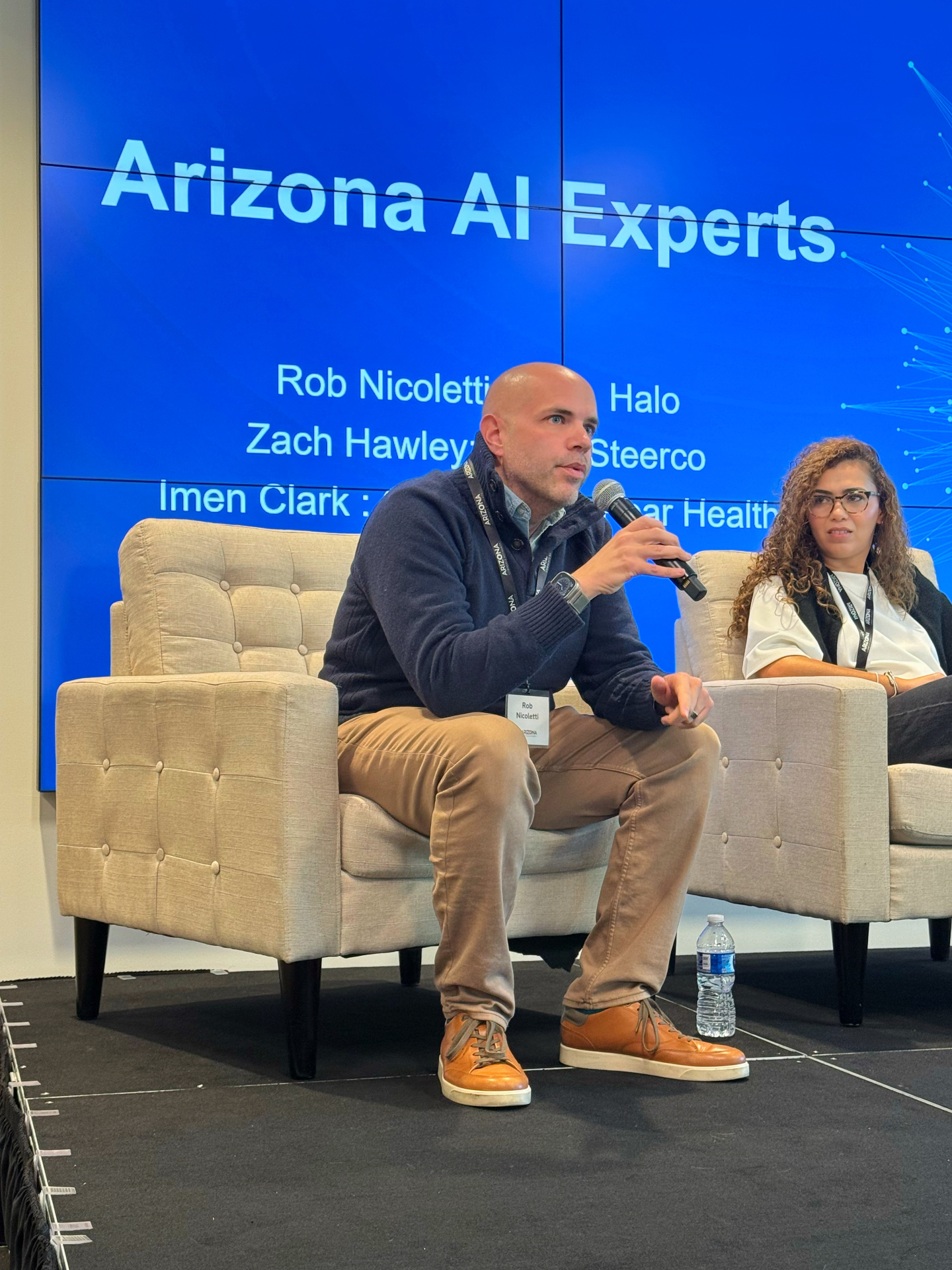
Rob Nicoletti
Founder, create human
Rob is the founder of create human and the architect behind HALO. He has spent the last two decades inside operating teams — building, scaling, and occasionally rescuing them — and writes here about AI, leadership, and what it takes to build organizations where humans become greater, not smaller.
Newsletter
Get the next essay in your inbox.
One email when the next piece of writing lands. No marketing, no list-sharing.