Essay · June 2026
AI and the future of quick-service restaurants
Beyond kiosks: a systemic approach to AI that turns data into judgment and judgment into action.
Beyond kiosks: a systemic approach to AI
Quick-service restaurants have been early adopters of digital tools, but many still treat AI as a collection of gadgets rather than a coherent operating model. According to Deloitte's State of AI in Restaurants survey, 8 out of 10 restaurant executives across 11 countries plan to increase AI investment in the coming fiscal year, with 60% citing customer experience as the primary expected benefit. These investments are moving beyond novelty: AI voice assistants and chatbots now handle reservation inquiries and drive-thru orders, and tests at Taco John's have produced faster service, higher order accuracy and larger average check sizes through automated upselling.
Yet technology alone does not drive growth. The National Restaurant Association's 2025 State of the Industry report found that 74% of operators view technology as augmenting rather than replacing labor, using AI for predictive scheduling, demand forecasting and automated inventory management. Labor remains the largest controllable cost for restaurants — 28–33% of revenue — so reducing decision latency in staffing matters as much as automating orders. Modern scheduling platforms pull sales data from POS systems and recommend staffing levels that match actual demand, reducing both overstaffed slow periods and understaffed rushes. AI-driven inventory systems can curb an industry problem that costs over $100 billion in food waste annually. Domino's, working with Microsoft, reported a 72% improvement in demand planning accuracy after implementing AI-driven forecasting, proving that predictive models can drive real ROI when integrated into supply planning.
Guest engagement is another frontier. Loyalty and rewards programs are now a competitive necessity: 61% of limited-service operators and 52% of full-service operators are actively investing in loyalty technology. These systems feed personalized offers to apps and email campaigns, shifting outreach from broadcast marketing to targeted re-engagement. On the consumer side, digital ordering and delivery are surging; the global online food delivery market is projected to grow from $130.2 billion to $223.7 billion by 2027. This channel shift gives QSRs unprecedented data on guest behavior, but only if their systems are integrated. The compounding benefit of restaurant tech comes from integration, not any single tool. A POS that feeds data into scheduling, inventory, CRM and marketing tools via APIs can compound gains across guest experience, waste reduction and labor efficiency.
AI is a force multiplier only when tied to a clear strategy.
Applying create human's frameworks
Create human argues that QSR success in the AI era depends on designing systems around clarity and cadence rather than chasing gadgets. The 3As of AI adoption provide a progression:
- Assist: Use AI to help employees do their jobs better — summarizing sales patterns, suggesting staffing changes, drafting promotional campaigns. Voice assistants in the drive-thru and AI-powered reservation systems fall here because they free staff to focus on quality and hospitality.
- Automate: Streamline repeatable workflows such as ordering, payment, loyalty enrolment, inventory reordering and basic guest communications. Automation should reduce friction and cost, not add complexity. AI-driven scheduling can automatically adjust shifts as demand forecasts change.
- Augment: Deploy AI as a strategic partner. Predictive analytics should inform menu mix decisions, marketing segmentation and site selection. Domino's 72% accuracy gain in demand forecasting shows how augmenting human judgment with AI can produce meaningful financial results.
Underlying these stages are the five loops — planning, execution, measurement, learning and adaptation — that HALO uses to run an organization. Planning sets clear goals for revenue, labor cost, guest satisfaction and waste reduction. Execution is the daily cadence of ordering, cooking and serving. Measurement collects data from POS, scheduling and loyalty systems. Learning translates metrics into insights — why did a promotion underperform? Which items drive waste? Adaptation then changes menus, staffing and marketing based on those learnings. Without explicit loops, QSRs become victims of decision latency: they see the data but cannot decide quickly enough to respond.
Designing for human experience
In an industry where brand and service define loyalty, technology should never eclipse the human experience. Guests care about speed, accuracy, personalization and hospitality — AI can enhance each of these but will undermine them if misused. AI-assisted communications must be fast; a guest who waits hours for a response will book elsewhere. Personalized offers should be meaningful and timely rather than spammy; segmentation and data-driven outreach deliver higher open and conversion rates.
Finally, QSR leaders must balance innovation with accessibility. Self-order kiosks, voice assistants and delivery drones may delight some guests but frustrate others. Create human recommends co-designing new experiences with frontline employees and customers, testing prototypes in loops and measuring both operational and human impacts. The objective is not to automate away the workforce but to elevate it. AI should handle the routine so employees can handle the relational — providing the smile at the drive-thru window, resolving exceptions and embodying the brand. As QSR executive Milton Molina puts it, AI is a force multiplier only when tied to a clear strategy. The restaurants that thrive in 2026 and beyond will be those that integrate AI into a human-centered operating system, turning data into judgment and judgment into action.
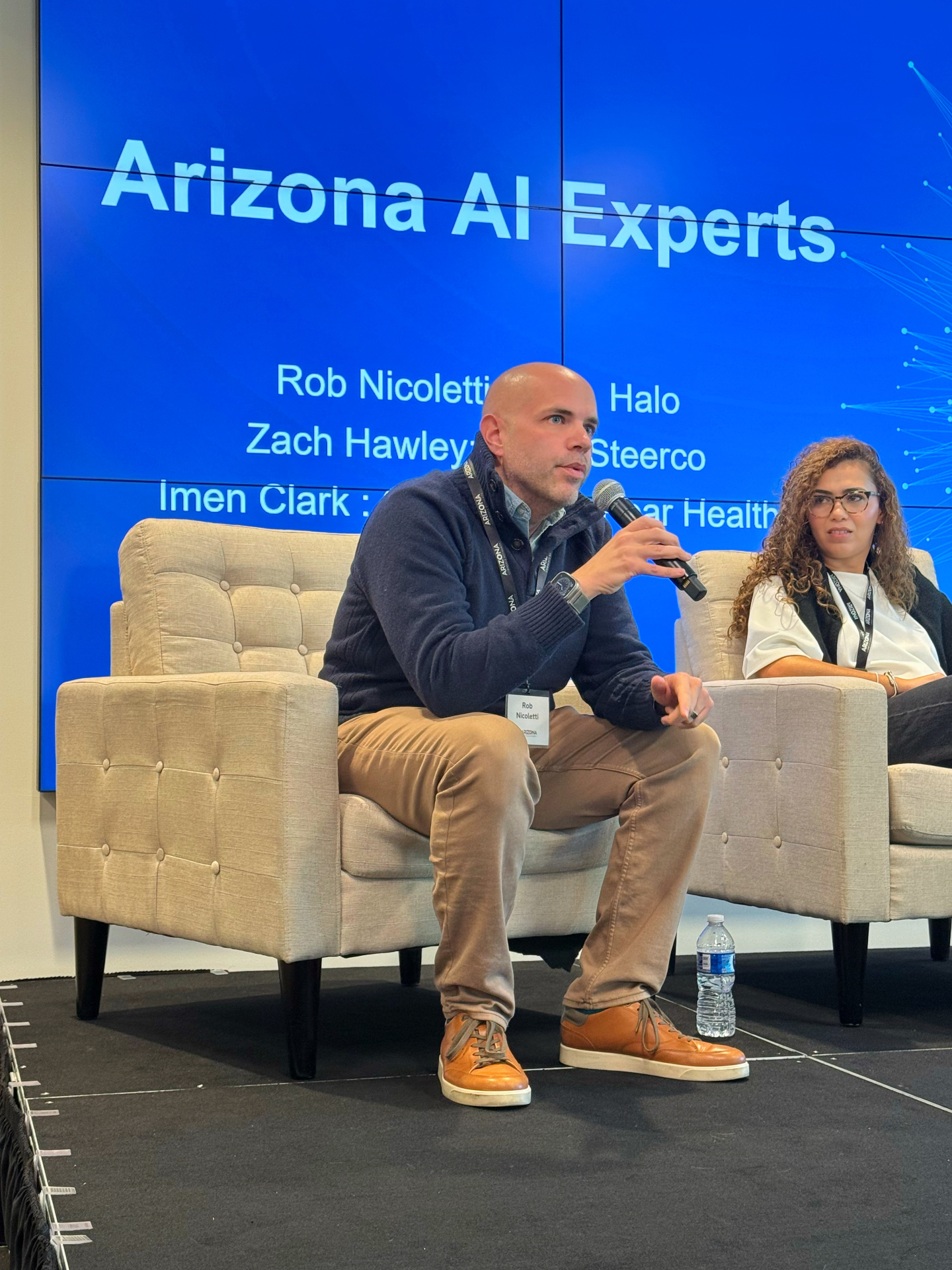
About the author
Rob Nicoletti
Founder, create human
Rob is the founder of create human and the architect behind HALO. He has spent the last two decades inside operating teams — building, scaling, and occasionally rescuing them — and writes here about AI, leadership, and what it takes to build organizations where humans become greater, not smaller.
Newsletter
Get the next essay in your inbox.
One email when the next piece of writing lands. No marketing, no list-sharing.