Essay · June 2026
Retention is the new growth: AI, humans and the future of health & wellness
The fitness boom is real — and so is the churn underneath it. Why retention, not acquisition, is the next operating discipline.
The quiet crisis hiding in plain sight
The fitness and wellness industry is booming. The global AI-powered fitness market was worth $10.68 billion in 2025 and is projected to grow to $57.8 billion by 2035. More than 40% of workouts created through ABC Trainerize's platform are now generated with AI, and trainers report up to 50% faster programming when they use AI assistants. For consumers the adoption curve is even steeper — 49% use AI-powered fitness and wellness apps every day, and another 30% use them weekly. AI is already shaping how people work out, eat and recover.
Yet amid this surge of innovation lies a quietly destructive trend: churn. Industry data show that failed payments drive up to one in three gym cancellations, with most of those cancellations avoidable. Manual reconciliation across disconnected billing and CRM systems consumes 10 to 15 staff hours per week, further eroding margins. The average annual member retention rate in fitness is just 66.4%, meaning roughly one in three members leaves each year. Those losses dwarf new member acquisition gains: studies show that a 5% improvement in retention can lift profits by 25–95%.
Retention isn't a marketing problem. It's an operational and human-experience problem.
AI isn't a silver bullet (and that's good)
Consumers' enthusiasm for AI fitness tools masks a more complex reality. 38% of millennials and 33% of Gen Z strongly agree that AI supports their health goals, but among Boomers the number drops to 12%. Only 2% of Boomers fully trust AI-powered apps. Meanwhile, 55% of consumers worry about data privacy, 37% are cautious about over-reliance on technology, and 35% cite lack of personalization as a barrier. People are eager for AI to help them — but they're afraid of being reduced to data points or losing control of their own health journey.
This ambivalence explains why AI deployments fail when they focus solely on automation or novelty. An AI-driven workout builder can slash programming time in half, but if the resulting plans feel generic, members will churn. AI billing systems can achieve up to 98% collection rates, but if outreach feels robotic, members will feel like line items instead of valued clients. Successful operators recognize that AI must assist and automate first, then augment human judgment — create human's 3As — and that all three stages require clear feedback loops.
Applying create human's five loops
Create human's framework breaks organizational learning into five continuous loops: planning, execution, measurement, learning and adaptation. Applied to fitness retention, these loops look like this:
- Planning: Define what success means. Retention goals should be linked to profitability — reducing churn from 33% to 25% could double profits. Create CAMP documents for each role (front-desk, trainers, sales) so everyone understands how their actions influence member commitment. Recognize that generational differences require different engagement strategies; Gen Z expects AI-enabled experiences while Boomers value trust and human connection.
- Execution: Deploy AI to assist rather than replace. Use AI coaching tools to generate personalized workouts and nutrition plans, freeing trainers to build relationships. Introduce AI-powered chatbots to answer routine questions and schedule sessions. Automate billing retries and communication workflows to recover failed payments before members churn. Keep humans in the loop by ensuring trainers review and adapt AI recommendations.
- Measurement: Track leading indicators of churn rather than waiting for cancellations. HALO's AI can flag at-risk members by analyzing attendance, billing, sentiment and engagement patterns. Monitor member satisfaction across segments — those who worry about privacy, those who feel over-dependent on technology, and those who crave personalization.
- Learning: Use measurement to refine both technology and human practices. If AI churn predictors mislabel members or send generic offers, adjust models and messaging. If Gen Z responds better to AI-generated workout challenges while Boomers prefer phone calls from staff, tailor your outreach accordingly. Encourage trainers to record insights from AI-assisted sessions and feed that feedback into product development.
- Adaptation: Continuously iterate. The fitness market's rapid growth (projected 19.3% CAGR to 2035) means new tools will appear quickly. Pilot emerging AI features — voice-guided classes, personalized recovery plans — with clear success criteria, incorporate them into the loops above, and retire tools that don't improve retention or experience.
Human-centered AI for retention
At first glance, AI appears to be the antidote to attrition: AI assistants can generate programs, automate communication and predict churn. Yet the numbers show that people abandon gyms when they feel disconnected, misunderstood or undervalued. That's why retention must combine AI-driven precision with human-centered practice. Four principles emerge:
- Personalize beyond the workout. More than 40% of workouts created on ABC Trainerize are AI-generated, but retention depends on context. Use AI to learn each member's goals, schedule, communication preferences and health concerns. Deliver recommendations that feel bespoke, not templated. Allow members to adjust the AI settings themselves to build trust.
- Automate friction, not relationships. AI can recover payments, schedule sessions and send reminders more efficiently than humans. Free your staff to coach, motivate and empathize — activities that AI cannot (and should not) replicate. Automate the bureaucratic so you can augment the human.
- Make retention a balance-sheet issue. The fact that one in three members churn every year isn't just a statistic — it's a financial leak. Tie AI initiatives directly to retention KPIs and gross margin. When AI-optimized billing improves collection rates and reduces cancellations, celebrate those wins. When an automated outreach campaign fails to retain members, stop and adjust.
- Build trust through transparency and governance. With 55% of consumers worried about data privacy and only 2% of Boomers fully trusting AI, communicate how you collect, store and use member data. Establish governance practices — privacy policies, audit trails, human oversight — to ensure AI decisions are fair and explainable. Invite feedback and give members control over their data.
As technology accelerates, humans should become greater, not smaller.
The opportunity ahead
Retention is the new growth engine for health and wellness. AI is not a magic bullet, but when applied through create human's frameworks — assist, automate, augment, and the five loops — it becomes a powerful force multiplier. It can reduce failed payments, save hours of manual reconciliation, and boost profits by up to 95% through modest improvements in retention. It can help trainers spend more time coaching and less time coding programs. It can give each member a uniquely supportive experience that adapts as their needs change.
Most importantly, it can ensure that as technology accelerates, humans become greater, not smaller. In a world where AI drives personalization at scale, the organizations that win will be those that treat retention not as a cost to manage, but as a human journey to design.
About the author
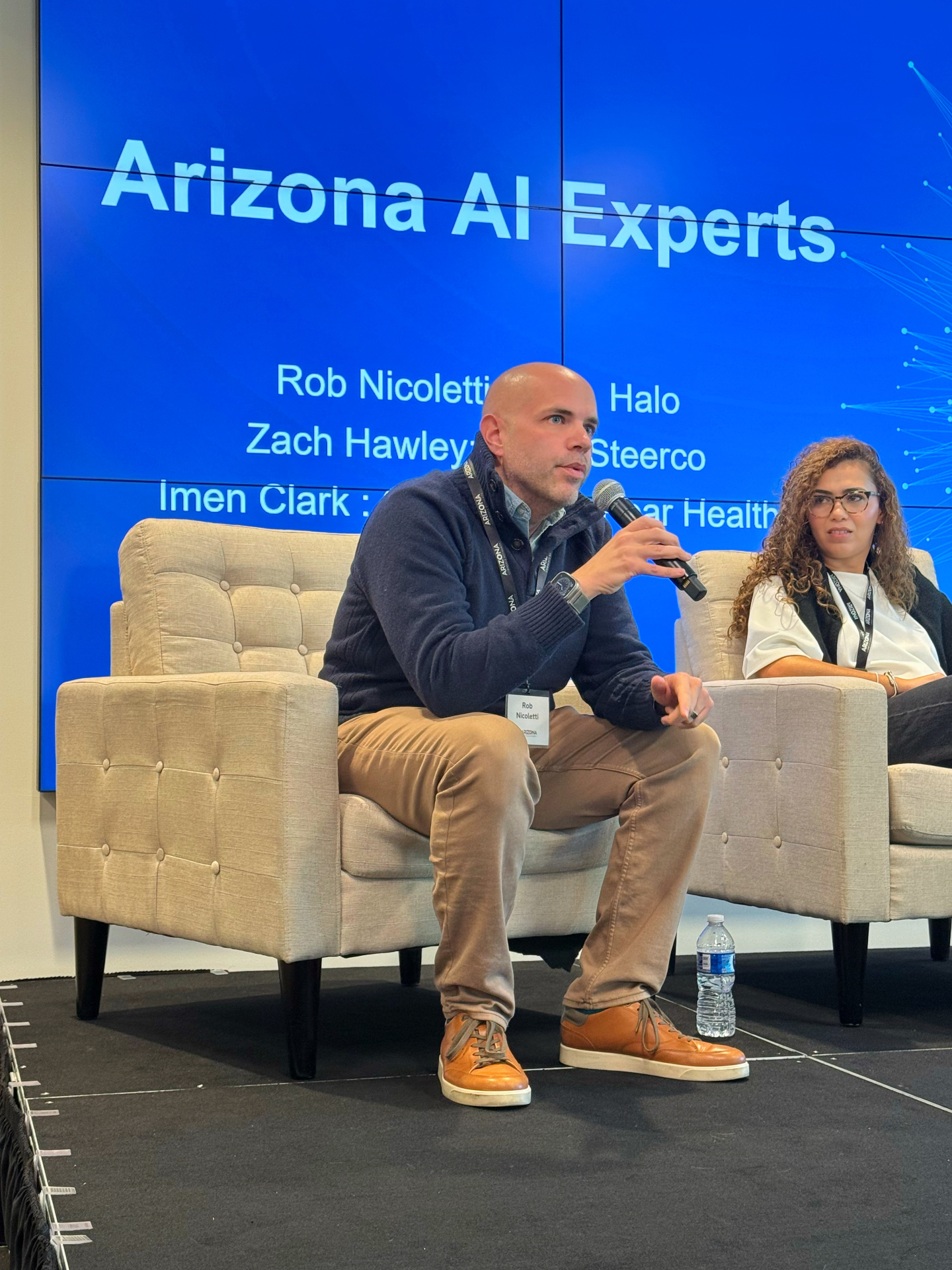
Rob Nicoletti
Founder, create human
Rob is the founder of create human and the architect behind HALO. He has spent the last two decades inside operating teams — building, scaling, and occasionally rescuing them — and writes here about AI, leadership, and what it takes to build organizations where humans become greater, not smaller.
Newsletter
Get the next essay in your inbox.
One email when the next piece of writing lands. No marketing, no list-sharing.