Essay · June 2026
AI and Hospitality: A Human-Centric Blueprint for Hotel Brands
78% of hotel brands deploy AI. Only 7% have a strategy. The winners will design human-centered systems that earn trust and amplify staff.
Where the Industry Stands
By 2025 the hospitality sector was already awash with AI pilots. A global study of hotel chains found that 78% of brands deploy at least one AI system and 89% intend to expand deployment within two years, yet only 7% operate with a comprehensive AI strategy. This mismatch between experimentation and direction explains why 62% of hospitality leaders cite a lack of AI expertise, 51% struggle with an unclear strategy and 45% face integration challenges.
At the same time, guest expectations are skyrocketing. A survey shows 73% of travellers are more likely to stay at a hotel that offers self-service technology and 40% prefer mobile check-in/out over the front desk. Chatbots can answer 80% of routine questions instantly, and 81% of guests want more digital service options, including AI messaging.
Luxury travellers expect the brand to remember pillow and temperature preferences, while Millennials prefer hotels with AI for round-the-clock support. Consumers are also using generative AI to plan travel; 89% of Booking.com respondents want to use AI for planning and nearly 40% of U.S. travellers used generative AI to plan trips in 2025. Yet only 2% of consumers trust AI to make autonomous booking decisions, reflecting a trust gap that must be bridged.
The Business Case: Efficiency and Personalisation
AI is already delivering meaningful operational wins. Hotels historically missed 20–40% of incoming calls because of staffing shortages; voice-AI platforms now answer calls 24/7, handle routine requests and convert bookings. Intelligent revenue-management systems dynamically adjust prices based on demand and competitor data, chatbots handle pre-arrival questions, predictive maintenance systems schedule room repairs before failures occur, and AI-driven inventory ordering prevents stock-outs and reduces waste.
Personalisation is no longer a luxury; it is becoming the standard. AI systems analyse historical stay data and external signals to tailor offers, recommend room upgrades and remember guest preferences. AI-driven loyalty programmes have been shown to increase repeat bookings by 12%. Voice assistants in rooms are popular with 62% of guests, enabling them to adjust lighting and temperature hands-free. A majority of travellers say their hotel experience improves when AI recommendations influence their stay.
Importantly, AI is also improving employee wellbeing. Predictive scheduling anticipates stress periods and automates repetitive tasks so staff can focus on empathy and complex problem solving. Hotels that create less stressful environments through AI-supported operations are better positioned to attract and retain talent.
The Human Challenge: Trust and Governance
Despite these opportunities, the industry's biggest challenge is not technology but organisational readiness. Leaders need to shift from point-solution experimentation to a coherent operating system. Guests may happily ask an AI chatbot for dinner recommendations but are hesitant to let an algorithm make booking decisions without human oversight. Privacy concerns and ethical use of data must be addressed alongside convenience; some guests will prioritise brands that collect less data.
On the supply side, hotels must decide where human judgment is essential and where AI can assist. When tasks such as pricing, inventory control and scheduling are automated, human teams can redirect energy toward building relationships and solving unique problems. As the CEO of EHL notes, autonomous systems anticipate needs so employees can focus on the human touch.
The winners will not be those who deploy the most flashy technology but those who design human-centered systems that earn trust and amplify staff capabilities.
Applying Create Human's Frameworks
Create Human's philosophy revolves around two frameworks: the 3As of AI and the Five Loops.
Assist → Automate → Augment. Hotels should begin by deploying AI to assist employees — examples include voice-enabled check-in, AI-powered call answering and chatbots that help staff triage requests. Once these systems are proven, operators can automate repeatable processes like demand forecasting, loyalty updates and maintenance scheduling. The final stage is augmentation, where AI helps leaders make better decisions by synthesising disparate data (revPAR, occupancy, ancillary spend) into actionable insights. This progression ensures technology supports humans rather than displacing them.
Five Loops: plan, execute, measure, learn, adapt. AI initiatives should not be isolated pilots; they must be integrated into a feedback system. During the planning phase, leaders identify business objectives — reducing phone abandonment or increasing repeat bookings. In execution, they deploy AI solutions and align employees on new workflows. Measurement tracks key metrics like call-conversion rates and guest satisfaction. Learning requires reflecting on what worked and what didn't, incorporating feedback from staff and guests. Finally, organisations adapt — refining models, adjusting processes and scaling successful solutions. HALO operationalises these loops by continuously synthesising operational data, surfacing insights and prompting leaders to make adjustments.
A Balanced Future
Hotel brands stand at the cusp of an AI-powered transformation. The winners will not be those who deploy the most flashy technology but those who design human-centred systems that earn trust and amplify staff capabilities. Adoption without strategy leads to fragmented point solutions, inconsistent guest experiences and frustrated employees. By embracing the 3As and the Five Loops, hotels can transform AI from a buzzword into a practical engine for efficiency, personalisation and growth — while preserving the warm hospitality that guests value most.
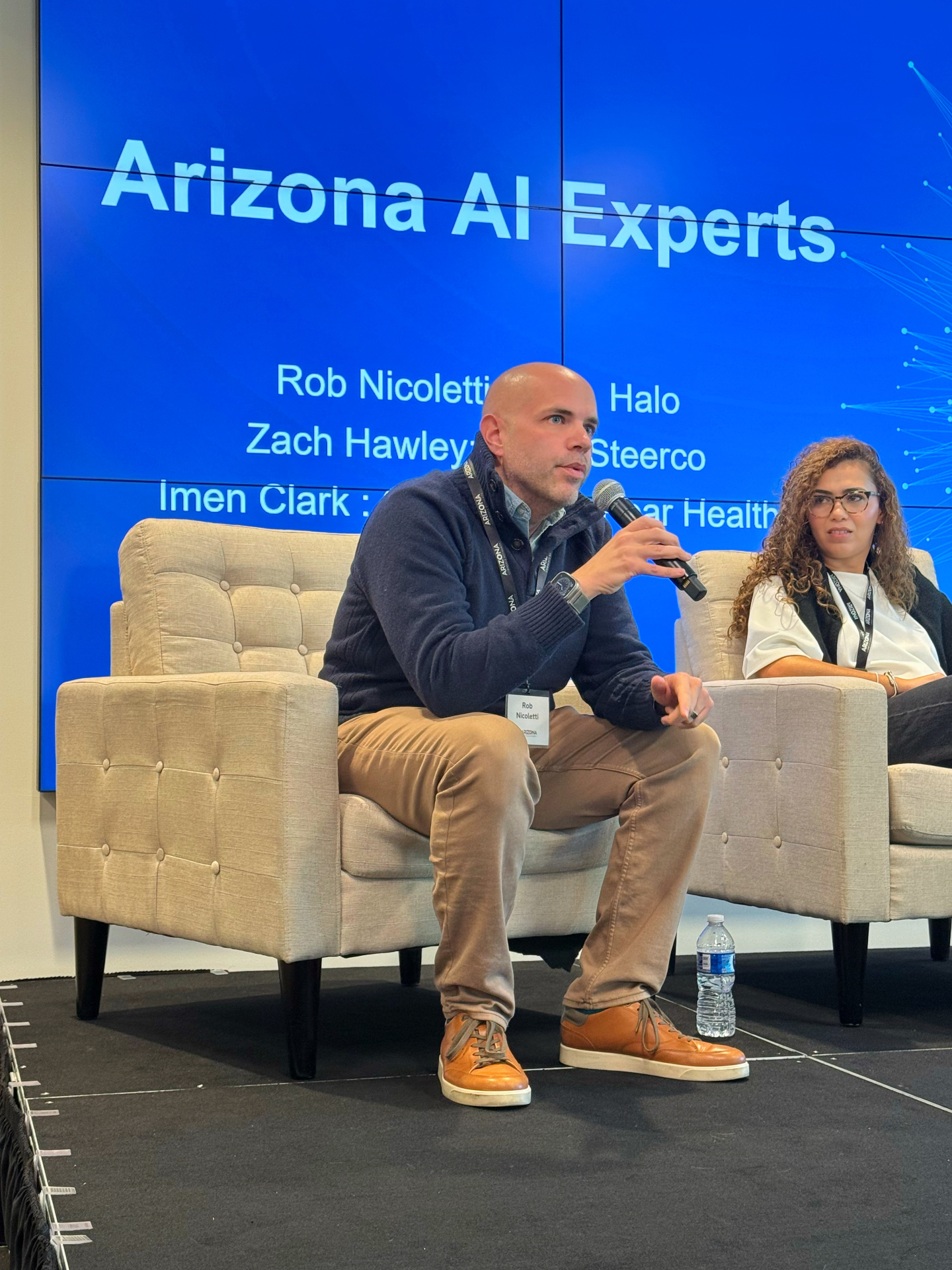
About the author
Rob Nicoletti
Founder, create human
Rob is the founder of create human and the architect behind HALO. He has spent the last two decades inside operating teams — building, scaling, and occasionally rescuing them — and writes here about AI, leadership, and what it takes to build organizations where humans become greater, not smaller.
Newsletter
Get the next essay in your inbox.
One email when the next piece of writing lands. No marketing, no list-sharing.