Essay · December 2025
Why alignment is the new competitive advantage
Every leader talks about alignment. Almost none quantify its impact. The numbers are sobering.
Every leader talks about alignment, but few quantify its impact. Analysis of over 10 million workplace interactions found that mentions of 'misalignment' in employee feedback increased 149% year over year. In high-misalignment organizations, 72% show visible executive disagreement, 68% suffer remote communication breakdowns, and 64% experience conflicting departmental goals. These misalignments aren't just cultural annoyances. They're financial liabilities. Research estimates that up to 20% of payroll — $2 million on a $10 million payroll — is wasted on misaligned work. Misalignment correlates with 40% higher turnover and 40% more time spent in decision-making meetings.
Alignment is clarity, not consensus
Alignment means that everyone understands the company's priorities, decision rights, and success metrics. Without alignment systems, strategy pivots widen the gap between what leaders decide and what teams execute. Remote work removes the informal corrections that once filled alignment gaps. Thinner middle management leaves fewer translation points. The result is stalled projects and frustrated talent.
Alignment becomes a habit, not an initiative.
Making it operational
Communicate strategy continuously, not annually. Decision systems must link goals to actions and measure progress. Feedback loops must be built into the operating rhythm so insights from the front line inform the plan. When HALO surfaces a misalignment — conflicting goals between marketing and operations — it routes the issue to the responsible executives and tracks resolution.
Why it's the advantage
Speed and cohesion amplify each other. Aligned companies pivot faster, execute more effectively, retain talent. Misaligned competitors burn resources and morale. In a world where AI makes technology ubiquitous, alignment of people, priorities, and decisions becomes the scarce resource. The organizations that master it will outlearn and outpace those that don't.
About the author
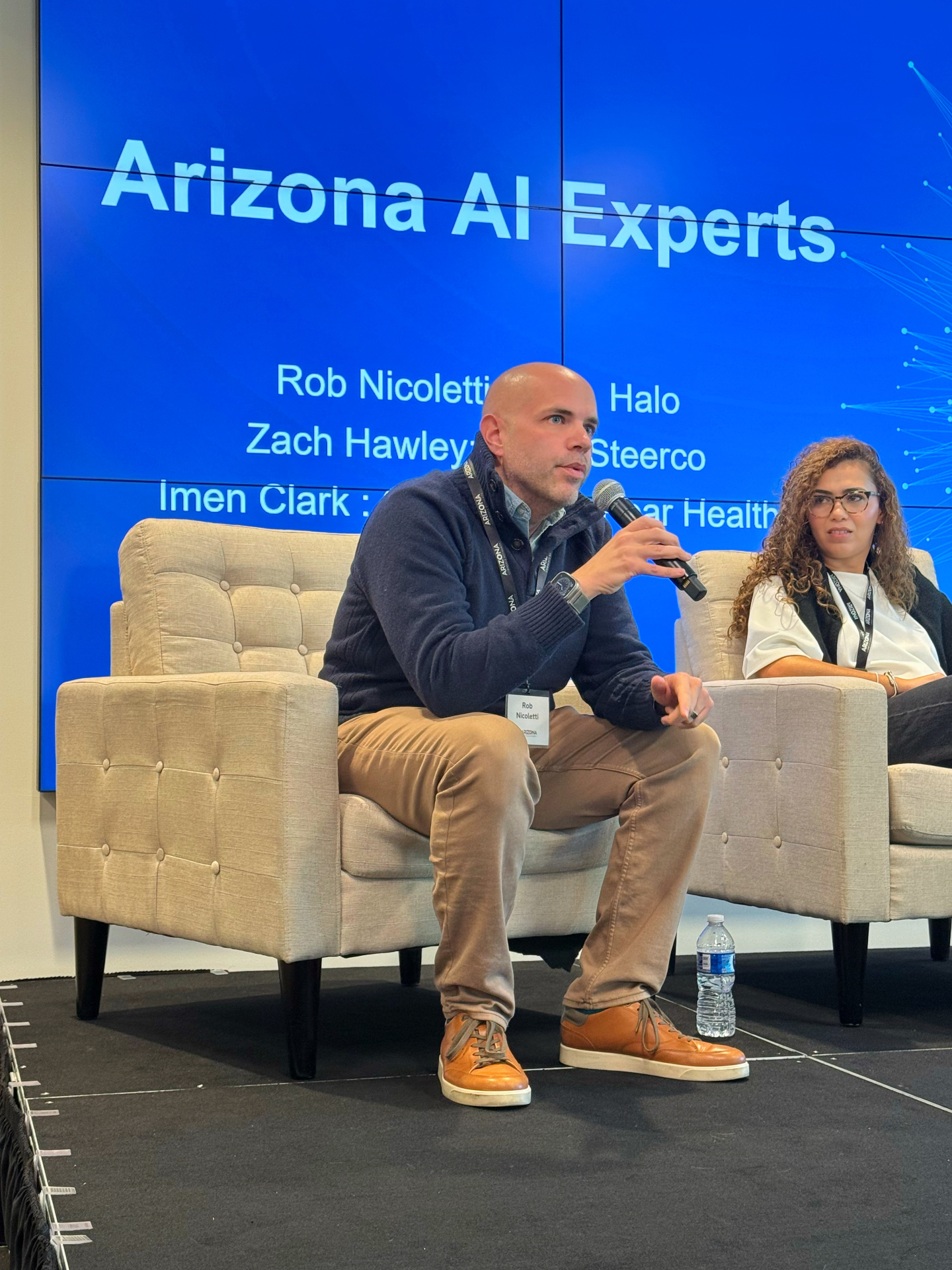
Rob Nicoletti
Founder, create human
Rob is the founder of create human and the architect behind HALO. He has spent the last two decades inside operating teams — building, scaling, and occasionally rescuing them — and writes here about AI, leadership, and what it takes to build organizations where humans become greater, not smaller.
Newsletter
Get the next essay in your inbox.
One email when the next piece of writing lands. No marketing, no list-sharing.