Essay · December 2025
The end of management by meeting
The modern enterprise is drowning in meetings. They are the visible symptom of an invisible failure.
If architecture is the invisible structure of decision making, meetings are the visible symptom of its failure. The average knowledge worker spends 15–17 hours per week in meetings, up from around 10 hours in the 1960s. Managers and executives spend 45–80% of their workweek in meetings. A single unnecessary weekly meeting with 10 people costs about $26,000 annually. And yet: 71% of meetings are deemed unproductive, 65% of senior managers say meetings prevent them from completing their work, and only 30% of meeting time is considered productive.
How we got here
As organizations grew more complex and distributed, leaders used meetings as a default coordination mechanism. Every misalignment or ambiguity became a calendar invite. The result is meeting inflation: back-to-back meetings up 42% since 2020, after-hours meetings up 28%, average duration up 10%. Meetings became both the place where information is shared and where decisions are supposedly made. Because agendas are unclear and decision rights undefined, participants leave with more questions than answers. The organization pays twice — once in time, once in delayed execution.
Fewer, better meetings create space for coaching, deep work, and creative problem solving.
From synchronous discussion to decision loops
Ending management by meeting requires a shift from synchronous discussion to asynchronous decision loops. Information sharing should happen automatically through systems like HALO that surface anomalies and recommendations in real time. Decisions should be routed to owners who can respond within a defined window, with escalation paths for unresolved issues. When a meeting is necessary, its purpose must be explicit: decide, inform, brainstorm, or build relationships.
Reclaiming human interaction
This isn't a call to eliminate human interaction; it's a call to reclaim it. MIT research shows that when organizations cut meetings by 40%, productivity jumps 71%. The end of management by meeting is about more intentional communication — freeing leaders to spend time where it matters: making judgments, developing people, shaping culture.
About the author
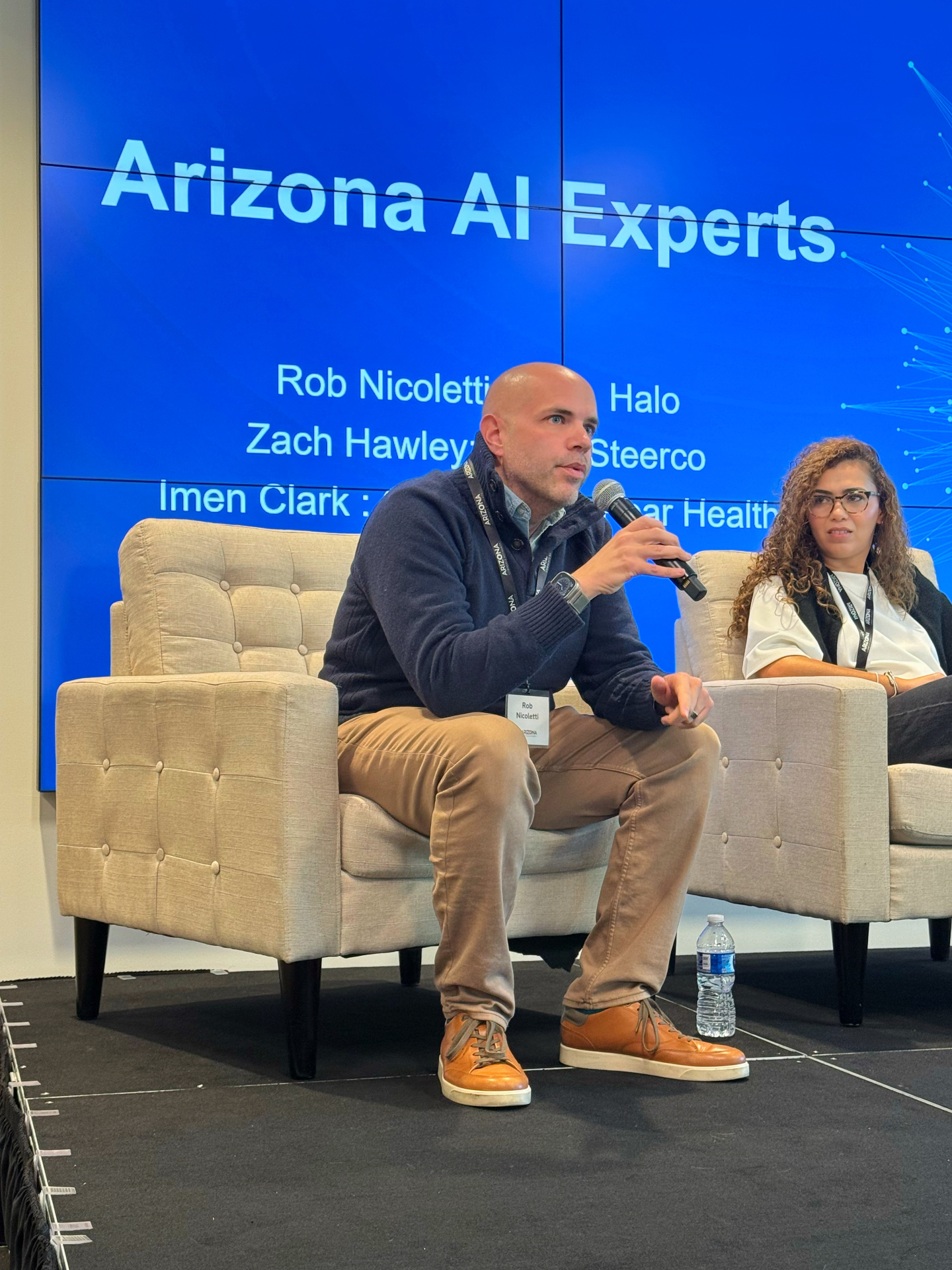
Rob Nicoletti
Founder, create human
Rob is the founder of create human and the architect behind HALO. He has spent the last two decades inside operating teams — building, scaling, and occasionally rescuing them — and writes here about AI, leadership, and what it takes to build organizations where humans become greater, not smaller.
Newsletter
Get the next essay in your inbox.
One email when the next piece of writing lands. No marketing, no list-sharing.