Essay · March 2026
The Job Description Isn't Broken. It's Incomplete.
A job description describes the role. A CAMP document defines how the employer and employee will stay aligned around that role.
I think we've asked job descriptions to do a job they were never designed to do.
A job description can help someone understand a position. It can explain the title, responsibilities, reporting structure, and qualifications. It is useful when hiring and onboarding someone.
But a job description alone doesn't create alignment between an employer and an employee.
It doesn't always make clear what the employee is accountable for. It rarely defines how the outcomes of their work will be measured. And it almost never establishes how often the employee and manager will sit down to review those outcomes together.
That is where problems begin.
A manager says: "They aren't taking enough ownership."
The employee says: "I'm doing everything in my job description."
The frustrating part is that both of them may be right.
The employee may be completing the work they were given. The manager may still not be getting the outcomes the organization needs.
That isn't always a performance problem.
More often than we want to admit, it is an alignment problem.
Most Performance Problems Start With Misalignment
We tend to think about performance after something has gone wrong.
A deadline was missed. A goal wasn't reached. A customer was lost. A number moved in the wrong direction.
Then the organization looks at the employee and asks, "Why didn't this happen?"
But before we hold someone accountable for an outcome, we should be able to answer a few basic questions:
- Did we clearly define the role?
- Did we agree on what the employee was accountable for?
- Did we identify who they were accountable to?
- Did we establish how the outcomes would be measured?
- Did we agree on how often we would review those outcomes?
If the answer to any of those questions is no, the problem may have started long before the employee's performance was evaluated.
That is why we created the CAMP document.
CAMP stands for Clarity, Accountability, Metrics, and Performance.
It is not meant to add more paperwork. It is meant to create a better agreement between an employer and an employee.
A job description describes the role.
A CAMP document defines how the employer and employee will stay aligned around that role.
Clarity: What Is the Role?
Clarity is the role description.
- What is the employee's job?
- Why does the role exist?
- What are the primary responsibilities?
- What work belongs to the role, and what work does not?
- What authority comes with the position?
This is the part most traditional job descriptions already address. But even here, many organizations create unnecessary confusion.
Roles change. Companies grow. Priorities move. New problems show up. Someone gets hired for one thing and, six months later, is spending most of their time doing something completely different.
The original job description stays in a folder while the actual job continues to evolve.
A CAMP document should reflect the role as it exists today, not just the role the company thought it needed when the employee was hired.
The employer and employee should be able to read the Clarity section and agree: "Yes, this is the role."
That may sound simple, but it matters.
People cannot do their best work when they are constantly trying to figure out what their work is supposed to be.
Accountability: What Are You Accountable For, and to Whom?
Responsibilities and accountability are not the same thing.
A responsibility is something you do.
Accountability is an outcome you own.
An employee may participate in a project without owning the final result. They may support a department without being accountable for its performance. They may complete dozens of tasks without knowing which outcomes they are ultimately expected to produce.
A CAMP document makes that ownership clear.
It should answer two questions:
- What are you accountable for?
- Who are you accountable to?
For example, a marketing leader may be responsible for content, events, email, advertising, and the website.
But what are they actually accountable for?
It might be increasing qualified demand, improving market recognition, or contributing a specific amount of pipeline.
And who reviews that accountability with them?
Is it the CEO? The chief revenue officer? A department leader? A board committee?
That relationship needs to be named.
Too many organizations use vague phrases like "take more ownership" without clearly defining what ownership means. Then employees are evaluated against expectations that were never fully discussed.
Accountability should not be a guessing game.
The employee should know what they own. Their manager should know what they own. The organization should know what they own.
When ownership is clear, conversations become much more productive.
Instead of asking, "Who was supposed to do this?" the conversation can focus on what happened, what got in the way, and what needs to happen next.
Metrics: How Will the Outcomes Be Measured?
Once an employee knows what they are accountable for, the next question is: How will we measure the outcomes of their work?
This is where many job descriptions fall apart.
They describe activities but not results.
- "Manage customer relationships."
- "Support sales."
- "Improve recruiting."
- "Oversee operations."
Those statements sound reasonable, but they leave a lot open to interpretation.
- What does "manage" mean?
- What does "support" mean?
- What does "improve" mean?
- How will the employee and manager know whether the work is producing the right outcome?
Metrics create a shared definition of success.
If someone is accountable for customer retention, the measurement might be retention rate, renewal rate, customer lifetime value, or customer satisfaction. If someone is accountable for recruiting, the measurements might include time to fill, offer acceptance rate, quality of hire, or new-hire retention. If someone is accountable for sales, the measurements could include qualified pipeline, close rate, sales cycle, new revenue, or average contract value.
The right metrics depend on the role. But the employee should know what they are before being evaluated against them.
Metrics also need to focus on outcomes, not just activity.
- Sending 500 emails is activity. Generating 20 qualified opportunities is an outcome.
- Publishing four articles is activity. Increasing qualified website traffic or conversions is an outcome.
- Holding customer meetings is activity. Improving retention is an outcome.
Activity can help explain the work, but outcomes tell us whether the work is creating value.
Not every contribution can be reduced to a number. Judgment, leadership, creativity, trust, and collaboration all matter.
But when an outcome can be measured, it should be measured. And both sides should agree on the measurement.
Performance: How Often Will We Align on the Outcomes?
The "P" in CAMP is often misunderstood.
Performance is not simply a rating. It is not a grade given to an employee once a year.
Performance defines how often the employer and employee will come together to align on the outcomes.
- What will be reviewed weekly?
- What will be reviewed monthly?
- What belongs in a quarterly conversation?
- When will the full CAMP document be revisited?
This creates a performance cadence.
Some metrics need to be watched every week. Others need more time before they tell us anything meaningful. The review schedule should match the work.
A sales leader may review pipeline every week, revenue every month, and overall strategy every quarter. An operations leader may review service issues weekly, efficiency monthly, and major improvement initiatives quarterly.
The point is not to schedule more meetings.
The point is to establish when alignment will happen so performance conversations don't become annual surprises.
An employee should never reach a year-end review and hear about a problem their manager noticed six months earlier.
That is unfair to the employee and ineffective for the organization.
Regular reviews give both sides the chance to ask:
- Are we achieving the outcomes?
- Are the metrics moving in the right direction?
- Has the role changed?
- Have the company's priorities shifted?
- Is the employee missing resources, information, or authority?
- Is the employee focused on the right work?
- Does an expectation or metric need to be adjusted?
- What needs to happen before the next review?
A good performance conversation should help people improve while there is still time to improve.
What CAMP Looks Like in Practice
Imagine a Director of Marketing.
A traditional job description may include responsibilities such as managing campaigns, overseeing content, maintaining the website, supporting sales, and managing the marketing budget.
A CAMP document would go further.
- Clarity: The Director of Marketing leads the company's marketing function and is responsible for building recognition, generating qualified demand, and supporting the organization's growth strategy.
- Accountability: The director is accountable for the marketing plan, marketing budget, brand consistency, demand generation, and marketing's contribution to the sales pipeline. The director is accountable to the CEO or chief revenue officer.
- Metrics: Success may be measured through qualified leads, marketing-sourced pipeline, website conversion, customer acquisition cost, brand awareness, campaign performance, and budget performance.
- Performance: Campaign and pipeline metrics may be reviewed weekly. Overall marketing performance may be reviewed monthly. Strategy, priorities, and the complete CAMP document may be reviewed quarterly.
Now the role is not just described.
The employer and employee have a shared understanding of what the role is, what the employee owns, how the outcomes will be measured, and when they will review those outcomes together.
That is alignment.
A CAMP Document Should Be Built Together
A job description is usually written for an employee.
A CAMP document should be completed with the employee.
That does not mean the employee gets to choose their own role, standards, or targets. The organization still has to determine what it needs from the position.
But there should be a real conversation.
- Does the employee understand the role?
- Are the areas of accountability clear?
- Can the employee actually influence the outcomes they own?
- Do they have the authority and resources required?
- Are the metrics reasonable?
- Is the review cadence appropriate?
- Do both sides understand what will happen when priorities change?
The goal is not complete agreement on every detail. The goal is to remove unnecessary ambiguity before it turns into frustration.
The employer is saying: "This is what we need from the role."
The employee is saying: "I understand what I own and how success will be evaluated."
Both sides are agreeing: "This is how we will stay aligned."
The Job Description Is Only One Part of the Agreement
The job description is not useless.
It is simply incomplete.
In CAMP, the job description becomes the Clarity section. It remains an important part of the document, but it is only one part.
Clarity without accountability leaves people unsure about what they own.
Accountability without metrics leaves success open to interpretation.
Metrics without a performance cadence leave problems undiscovered for too long.
CAMP brings all four pieces together:
- Clarity: This is your role.
- Accountability: This is what you own and who you are accountable to.
- Metrics: This is how the outcomes of your work will be measured.
- Performance: This is how often we will review and align on those outcomes.
That is a much stronger foundation for the relationship between an employer and an employee.
People Shouldn't Have to Guess What Success Looks Like
We expect people to take ownership, produce outcomes, and perform at a high level.
That is reasonable.
But people also deserve clarity.
They deserve to know what their role is, what they are accountable for, how their work will be measured, and when they will have the opportunity to discuss their progress.
Good people can fail inside unclear systems.
Not because they don't care.
Not because they aren't capable.
Because they are working from a different definition of success than the person evaluating them.
A CAMP document helps close that gap.
A job description says: "Here is your job."
A CAMP document says: "Here is your role. Here is what you own. Here is how we will measure the outcomes. And here is how often we will sit down to make sure we are still aligned."
Performance should not begin with an annual review. It should begin with a clear agreement.
About the author
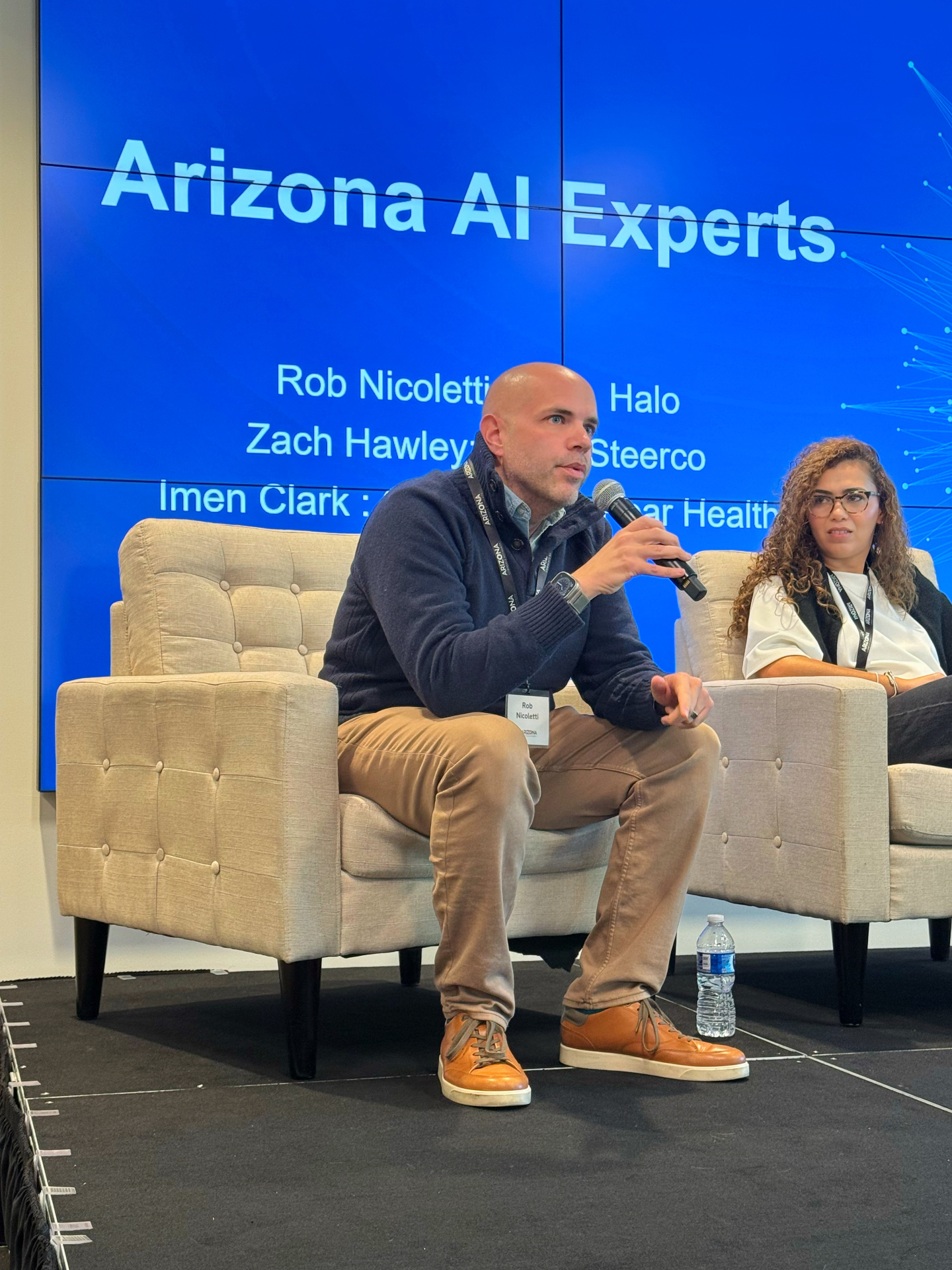
Rob Nicoletti
Founder, create human
Rob is the founder of create human and the architect behind HALO. He has spent the last two decades inside operating teams — building, scaling, and occasionally rescuing them — and writes here about AI, leadership, and what it takes to build organizations where humans become greater, not smaller.
Newsletter
Get the next essay in your inbox.
One email when the next piece of writing lands. No marketing, no list-sharing.