Essay · June 2026
Why we build AI for humans, not in place of them
Our founding belief and what it commits us to.
When we started Create Human, people asked us why. Wasn't AI going to replace humans? Wouldn't automation make most jobs obsolete? Our answer has always been the same: AI should expand human agency, not diminish it. The biggest constraint on AI today is not technology but leadership. Microsoft's 2026 Work Trend Index reveals that employees are ready to use AI, but the systems around them are not. Organizational factors like culture, manager support and talent practices account for twice the reported AI impact of individual effort. In other words, whether AI makes us greater or smaller depends on how leaders deploy it.
The data are clear: 66% of AI users say AI has allowed them to spend more time on high-value work, and 58% report they are producing work they couldn't have done a year ago. Among the most advanced users (“Frontier Professionals”), 80% say AI lets them do things that were previously impossible. These users treat AI as a partner: 86% treat AI output as a starting point rather than a final answer, and they emphasise quality control (50%) and critical thinking (46%) as the most important human skills. AI lifts the ceiling on what people can do, but it also raises the premium on judgment.
AI should expand human agency, not diminish it.
Employees are ready
A SnapLogic study found that 81% of employees believe AI improves their performance, with 68% calling for more AI tools, 61% saying AI makes their workday more efficient, 49% noting better decision-making, and 51% crediting AI with improving work-life balance. These numbers show that people want AI to help them, not replace them. They see AI as a tool for analyzing data, moving information and accelerating insights.
Leaders are lagging
A 2026 Adecco study of 2,000 C-suite executives found that 45% expect AI agents to be integrated into workflows within a year, but only 30% of workers say the same. Only 22% of leaders are highly confident their organizations are developing future-ready capabilities, 31% say leadership has sufficient AI skills, 36% believe their talent strategy communicates opportunities created by AI, and only 39% involve employees directly in job redesign. Ironically, 70% of workers feel ready to collaborate with AI, while only 39% of leaders think employees would be comfortable. This mismatch between employee readiness and leadership confidence is the true AI gap.
What it commits us to
Building AI for humans commits us to several principles. We must design systems that assist before they automate and automate before they augment, allowing people to build confidence and competence. We must invest in training and change management, not just algorithms; only 37% of heavy AI users currently have access to training. We must embed explainability, ethics and human oversight so that decisions remain accountable. And we must measure success not by how many workers we replace but by how much human potential we unlock. When HALO and LEO are deployed, they free people from data drudgery and support them in making better judgments. That is why we build AI for humans — it's the only way to make organizations more intelligent and more humane at the same time.
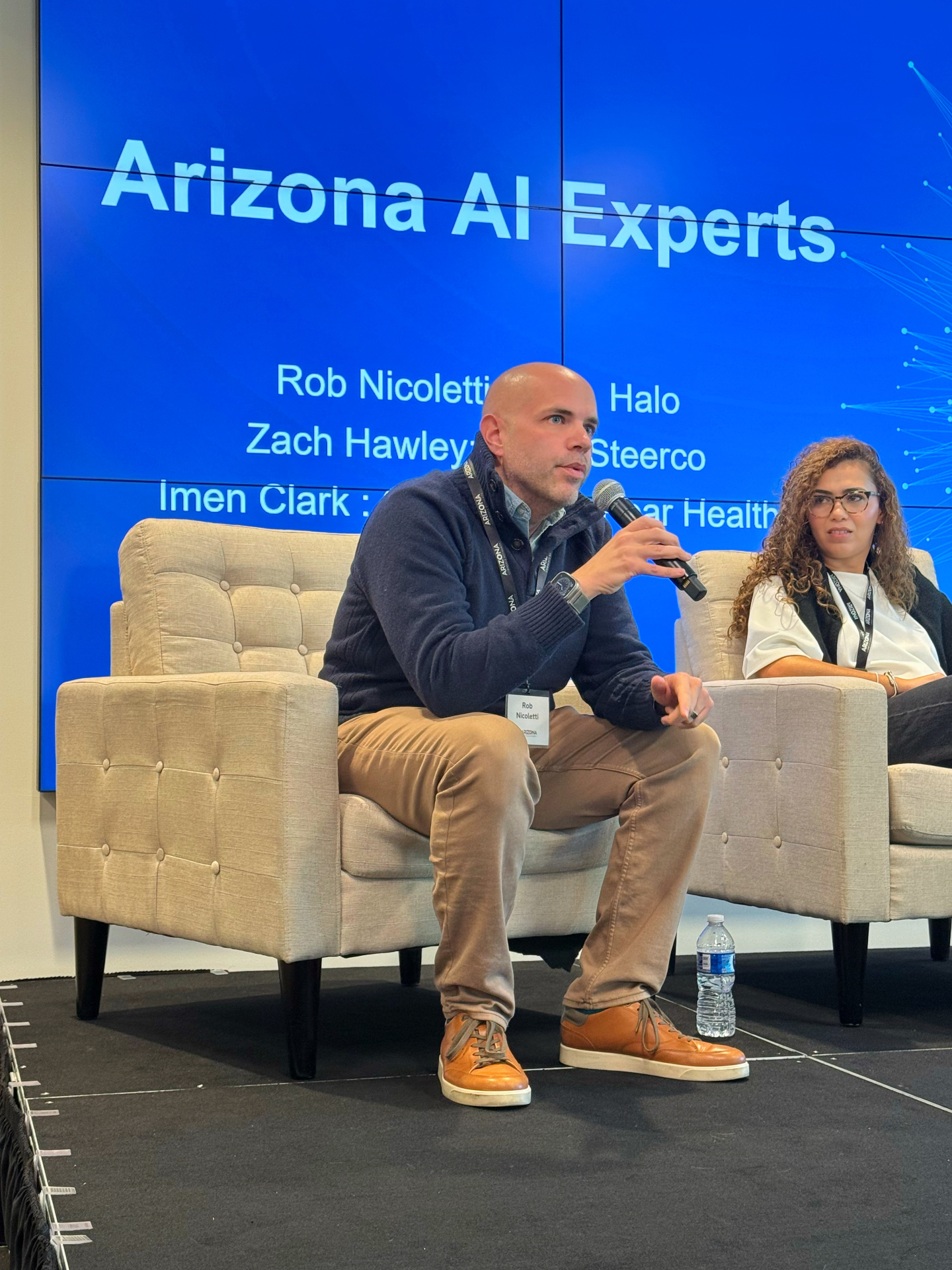
About the author
Rob Nicoletti
Founder, create human
Rob is the founder of create human and the architect behind HALO. He has spent the last two decades inside operating teams — building, scaling, and occasionally rescuing them — and writes here about AI, leadership, and what it takes to build organizations where humans become greater, not smaller.
Newsletter
Get the next essay in your inbox.
One email when the next piece of writing lands. No marketing, no list-sharing.